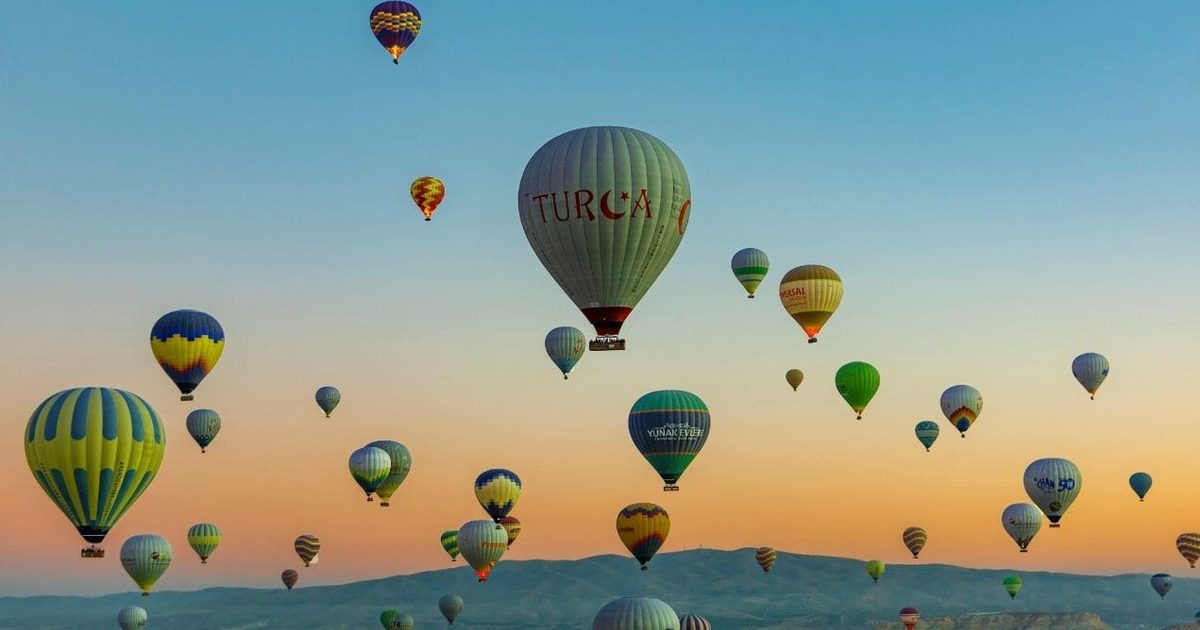
Most people picture Cappadocia from above: balloons, fairy chimneys, valleys at sunrise. But some of the most memorable hours you can spend here are underground. A Cappadocia underground city is a whole settlement dug down into soft volcanic rock, with stables, kitchens, wine presses, chapels and air shafts, built so that entire villages could disappear below ground when danger came.
There are dozens of these sites in the region, but two are the main visitor sites: Derinkuyu and Kaymaklı. Guests ask us every week which one to see. This guide compares them honestly, covers children, older travellers and tight spaces, and shows how to build a full day around one with the Ihlara Valley walk and Selime Monastery. That route is the Green Tour, and our Cappadocia Green Tour runs it every day of the year, starting at Derinkuyu.
Quick Answer: Derinkuyu or Kaymaklı?
If you only have time for one, here is how they differ in practice.
| Derinkuyu | Kaymaklı | |
|---|---|---|
| Layout | Deep and vertical, around eight levels open | Shallower and spread out, four levels open |
| What stands out | Long staircases, a deep air shaft, a church on a lower level | Narrow, twisting passages and many small storerooms |
| Physical effort | More stairs, steeper descent and climb back | Less depth, but more crouching and turning |
| Feels tight? | In places, mostly on the stairways | In places, mostly in the low connecting tunnels |
| Distance from Göreme | Roughly 45 minutes by road | Roughly 30 to 50 minutes depending on your hotel |
Our verdict: choose Derinkuyu for the sense of depth and scale, choose Kaymaklı if steep stairs worry you more than low ceilings, and do not try to see both on a short trip unless you are a real enthusiast.
What Is a Cappadocia Underground City?
The volcanic tuff of central Cappadocia is soft when you cut it and hardens on contact with air. People here carved homes, churches and pigeon houses into the rock for thousands of years, and they also dug downwards. Some underground spaces may go back to the first millennium BC, but most of what you walk through today was enlarged in the Byzantine period, when Arab raids swept across Anatolia and villagers needed somewhere to hide with their families, animals and food.
The design is clever. Large round stones, shaped like millstones, could be rolled across passages from the inside to seal them. Vertical shafts brought fresh air down to the lowest levels, kitchens still show blackened ceilings, and storerooms held grain, wine and oil for weeks. Local families used some of the cities as refuges and cellars until the early 20th century.
Inside, the temperature stays cool and steady all year, usually in the low to mid teens Celsius, a welcome break in July.
Derinkuyu Underground City: Deep and Vertical

Derinkuyu is the deepest underground city open to visitors in Cappadocia. It was rediscovered in the 1960s, when a local resident found a passage behind a wall of his house, and it opened to tourists in 1969. The visitor route takes you down roughly eight levels, and the sense of going deeper and deeper is what makes it special.
What you see on a typical guided walk:
- Upper levels: stables, a wine press, kitchens and living rooms, with the smoke stains still on the ceiling.
- Rolling stone doors: several of the large round stones are still in place, and your guide will show you how they were moved from the inside.
- The main air shaft: a long vertical shaft that drops through the levels and kept the whole complex breathing.
- The lower levels: a cross-shaped church and a long barrel-vaulted room that guides often describe as a meeting hall or school.
The walk usually takes about an hour. The stairs are the main challenge: they are steep, uneven in places, and you have to climb all the way back up. There are handrails and electric lights, and passages are one-way at busy times. You will also hear the story of a tunnel linking Derinkuyu to Kaymaklı; whatever the truth, it is not part of any visitor route.
Kaymaklı Underground City: Wide and Maze-Like
Kaymaklı lies on the main road between Nevşehir and Derinkuyu, about 10 km before Derinkuyu, and the modern village sits directly on top of it. It opened to visitors in 1964, and four levels are open today. It does not go as deep, but it spreads out sideways in a dense web of tunnels, so it feels more like a warren than a tower.
What stands out at Kaymaklı:
- Many small rooms for storage, with niches cut into the rock.
- A chapel on one of the upper levels, with an altar and benches carved from the stone.
- Kitchens and a wine press, plus a stone block with small hollows that guides link to metalworking.
- Low, sloping connecting tunnels, where most adults need to bend for a few metres.
Because the levels are closer to the surface, there is less climbing overall. The trade-off is more ducking and turning, which is why some guests find Kaymaklı more claustrophobic than Derinkuyu, even though it is shallower.
Derinkuyu vs Kaymaklı: Claustrophobia, Fitness and Children
Both sites are manageable for most people who take it slowly. A few honest pointers:
- If you dislike tight spaces: the main rooms are larger than you expect and well lit. The tight moments are short. Stay near the front of your group so you are not waiting in a narrow spot; you can always turn back with your guide.
- If you have bad knees or a heart or breathing condition: Derinkuyu's stairs are the harder test. Tell us before you book. Some guests stay on the upper levels or wait outside, which is fine.
- Wheelchairs and strollers: neither site is accessible. Bring a baby carrier instead of a pushchair.
The Green Tour Route: Underground City, Ihlara Valley and Selime

An underground city takes an hour or so, so the smart plan is the south Cappadocia day that adds the Ihlara Valley and Selime Monastery. This classic Cappadocia Green Tour shows a greener, quieter side of the region. Our Green Tour runs in this order:
- Hotel pick-up in the Göreme, Ürgüp or Nevşehir area, with the time confirmed the day before.
- Derinkuyu Underground City, explored with your guide in the morning.
- Ihlara Valley, where you go down about 350 uneven stone steps into the canyon and walk roughly 4 km beside the Melendiz River, past rock-cut churches with faded Byzantine frescoes.
- Lunch in Belisırma, at tables set right over the stream.
- Selime Monastery, a multi-storey complex cut into the cliff at the north end of the valley, with a cathedral hall, kitchens and stables.
- Pigeon Valley viewpoint on the way back, named for the dovecotes carved into its rock walls.
The whole day lasts 8 to 9 hours, with about three and a half hours of driving in total.
Which of Our Tours Visits Which Underground City?

- Cappadocia Green Tour: a day tour for guests already staying in Cappadocia. Derinkuyu, Ihlara, Belisırma, Selime and Pigeon Valley.
- 4 Days 3 Nights Cappadocia Tour from Istanbul: flights from Istanbul, three nights in one hotel, the Red Tour on Day 2 and the Green Tour with Derinkuyu on Day 3.
- Konya and Cappadocia tour: flights, Konya's Mevlana Museum on the way in, and Kaymaklı with Ihlara and Selime on Day 3.
You can browse every option, including longer trips that pair Cappadocia with Istanbul, on our Cappadocia tour packages page. If you still need to sort out how to reach the region, our guide on how to get from Istanbul to Cappadocia compares flights, buses and driving.
When to Visit and How to Avoid the Groups
Underground cities are open all year, so crowds matter more than weather. Tour buses tend to arrive from mid-morning to early afternoon, and in peak months the narrow passages can turn into a slow queue.
- Go early or late. The first hour after opening and the last couple of hours before closing are usually the calmest. Opening hours change with the season, so check the official hours before you go.
- Avoid peak Turkish holidays if you can. Weekends in spring and autumn, the two bayram holidays and school trip season in April and May bring large domestic groups.
- Winter is quietest. Cappadocia in January and February is cold above ground but calm below it.
- On a guided tour, your guide adjusts the order of the day to the crowds. On our Green Tour, the underground city comes first, before the busiest part of the day at most sites.
Entrance fees are set by the site operators and change regularly, so we do not quote them here. They are included in all three tours above; if you go independently, check the current fee at the ticket office or official website, and check whether your museum pass is accepted there.

What to Wear and Bring
- Shoes with grip. The steps are worn smooth in places, and the Ihlara descent is uneven stone. Trainers or light walking shoes are ideal; leave sandals at the hotel.
- A light layer. It is cool underground even on a hot day, and the Ihlara canyon is shaded and breezy.
- A small bag only. Big backpacks catch on walls in the tunnels. Keep a water bottle, a hat for the valley and your phone.
- Sun protection in summer. The Ihlara walk and Selime are open to the sun in the afternoon.
Fitting It Into Your Cappadocia Trip
We usually suggest at least two full days in Cappadocia: one for the Red Tour around Göreme and one for the Green Tour in the south. If you want a hot air balloon flight, plan it on a morning before one of those days, and leave a spare morning in case of a weather cancellation; our hot air balloon guide explains how flights are scheduled.
Our Cappadocia cave hotel guide compares Göreme, Uçhisar, Ürgüp and Avanos. For the wider picture, from seasons to food, see our Cappadocia holiday guide.

Frequently Asked Questions
Which is better, Derinkuyu or Kaymaklı?
Derinkuyu is deeper and more impressive in scale, with long staircases and around eight levels open. Kaymaklı is shallower but more maze-like, with more low tunnels. For most first-time visitors we recommend Derinkuyu, which is the one included on our Green Tour.
How long do you need in a Cappadocia underground city?
About an hour is enough for a guided visit to either Derinkuyu or Kaymaklı. Allow a little longer at busy times, when passages can slow down.
Can children visit the underground cities?
Yes, and most children love them. Toddlers are easier in a baby carrier, because strollers cannot be used and Derinkuyu has many steps.
Is the Ihlara Valley walk difficult?
The walk is about 4 km on a mostly flat path beside the river, at an easy pace. The harder part is the start, with about 350 uneven stone steps down into the canyon.
Do I need to buy tickets in advance?
Tickets are sold at the entrance, and entrance fees are included on our Green Tour, the 4-day Cappadocia tour and the Konya and Cappadocia tour. If you visit independently, check the official opening hours and current fee before you go.
Can I see both Derinkuyu and Kaymaklı in one day?
Yes, they are only about 10 km apart, but most visitors find one is enough. If you have a strong interest in history, ask us about a private day planned around both.
Ready to go underground?
Book the Cappadocia Green Tour for a full day with Derinkuyu, Ihlara Valley and Selime, or message us with your dates and we will fit it around your balloon morning and hotel.